

Character Stickers
Character Sticker Ideas: Build an Original Cast
Explore character sticker ideas for an original cast with distinct silhouettes, colors, and stories. Make playful custom stickers from your own world.
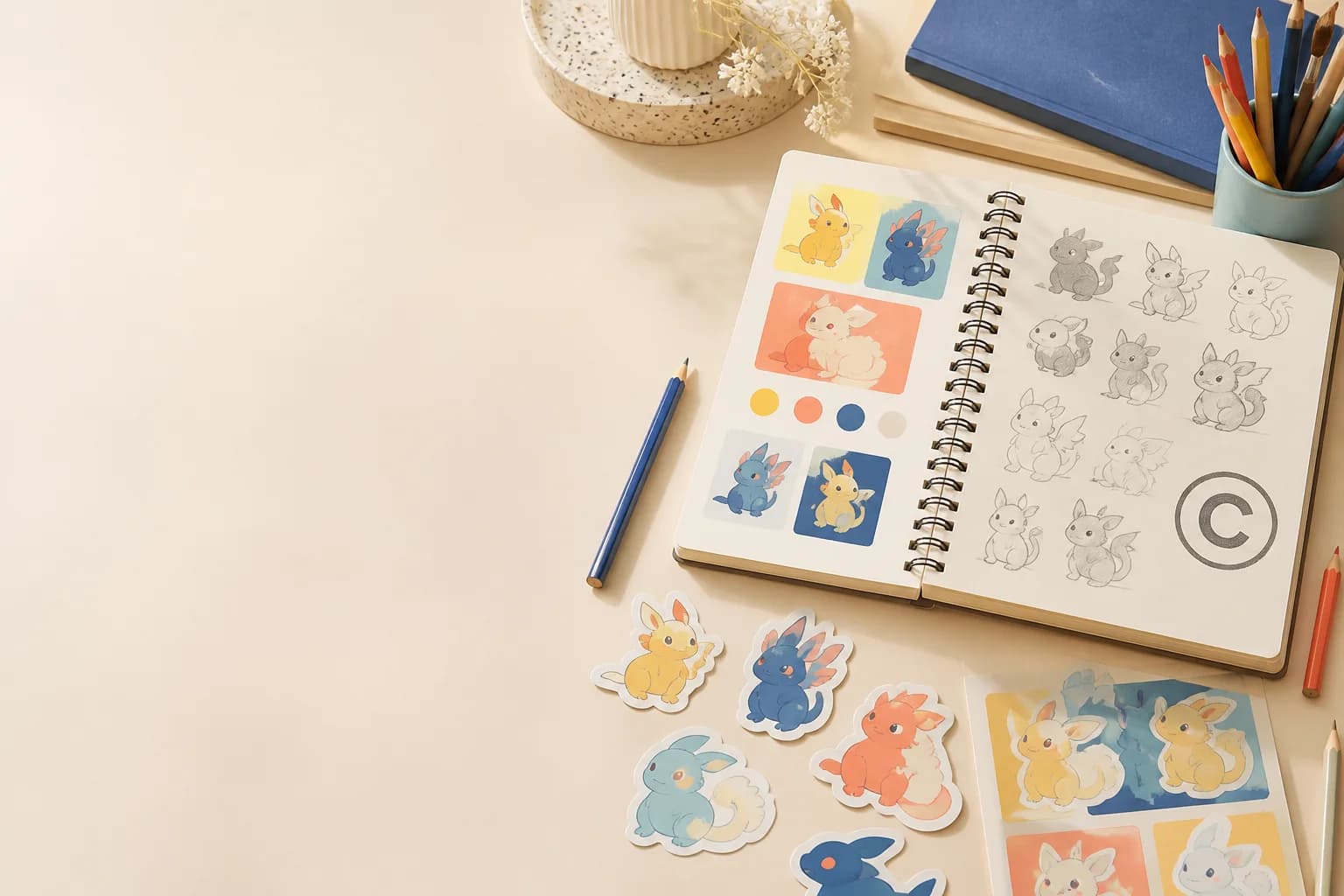
Quick answer
The most lasting character sticker ideas come from a world that feels like your own. Start with an original personality, color language, shape, and everyday habit, then turn those traits into a compact sticker design. A character does not need a huge backstory; one memorable feeling can make people want to see more. Start with the real place or feeling the sticker is meant to bring to life, then choose a scale that keeps the main idea clear. Character-led art works best when the silhouette reads before tiny details, while lifestyle stickers feel strongest when color and finish fit the objects people carry every day. For something truly personal, use the custom sticker studio to turn your own artwork, photo, or prompt into a design made for a favorite surface. Test the size there, keep room around the edge, and choose a finish that supports the mood instead of competing with it.
What makes character sticker ideas feel personal?
The most lasting character sticker ideas come from a world that feels like your own. Start with an original personality, color language, shape, and everyday habit, then turn those traits into a compact sticker design. A character does not need a huge backstory; one memorable feeling can make people want to see more. Start with the real place or feeling the sticker is meant to bring to life, then choose a scale that keeps the main idea clear. Character-led art works best when the silhouette reads before tiny details, while lifestyle stickers feel strongest when color and finish fit the objects people carry every day. For something truly personal, use the custom sticker studio to turn your own artwork, photo, or prompt into a design made for a favorite surface. Test the size there, keep room around the edge, and choose a finish that supports the mood instead of competing with it.
Begin with give each character a simple role or feeling. For artists building a personal cast of original characters, that choice is more than a technical step: it decides how the sticker will feel when it becomes part of a collection of small characters living in familiar everyday moments. Look at the object from the distance people normally use it, then bring the design back to one clear focal point. A simple character, icon, or custom scene has room to connect when the scale, color, and border all support the same idea. Keep the important details strong enough to notice quickly, and let the quieter details make the design feel discovered over time. Step 1 is where the sticker begins to feel like a small piece of everyday storytelling.
Build the idea around a real everyday moment
Use these steps to move from a simple thought to a character world that feels distinct, warm, and reusable.
Begin with give each character a simple role or feeling. For artists building a personal cast of original characters, that choice is more than a technical step: it decides how the sticker will feel when it becomes part of a collection of small characters living in familiar everyday moments. Look at the object from the distance people normally use it, then bring the design back to one clear focal point. A simple character, icon, or custom scene has room to connect when the scale, color, and border all support the same idea. Keep the important details strong enough to notice quickly, and let the quieter details make the design feel discovered over time. Step 1 is where the sticker begins to feel like a small piece of everyday storytelling.
Choose a silhouette that looks different from the rest of the cast becomes more useful when you imagine it in a real setting instead of only on a screen. In a original character illustration design, the surface, lighting, shape, and surrounding objects all influence the final feeling. Try placing a paper outline on the item, or picture the sticker next to the things that travel with it. Does the main subject still lead the eye? Does the color feel at home there? This is also a lovely place to bring in a different silhouette, palette, role, and tiny ritual for each character. A personal design does not need to be loud to be memorable; it just needs a clear reason to belong in the scene.
Treat build a personal color pairing as a chance to make the custom sticker more recognizably yours. Choose the simplest version of the idea that still carries its emotion, then build outward only when each extra detail adds warmth, humor, or character. A small sticker has a limited stage, so a strong silhouette and a deliberate color pairing often say more than a busy collection of effects. If you are working from a photo or a prompt, pull out the feeling you want to keep rather than trying to copy every visual detail. That approach gives artists building a personal cast of original characters room to create a design that can grow into future characters, scenes, and sticker packs.
A helpful way to explore add one recurring object or habit is to compare two friendly variations side by side. Keep the main subject and size steady, then change only one thing: perhaps the border, finish, palette, or pose. Notice which version makes the object feel more alive. The right option should make a collection of small characters living in familiar everyday moments feel intentional, not over-designed. This kind of small experiment is especially useful for an original character because tiny changes in expression, color, or stance can make a big difference. Save the version that feels most like your idea, and use it as a visual anchor when you add new stickers later.
Begin with place the character in an everyday scene. For artists building a personal cast of original characters, that choice is more than a technical step: it decides how the sticker will feel when it becomes part of a collection of small characters living in familiar everyday moments. Look at the object from the distance people normally use it, then bring the design back to one clear focal point. A simple character, icon, or custom scene has room to connect when the scale, color, and border all support the same idea. Keep the important details strong enough to notice quickly, and let the quieter details make the design feel discovered over time. Step 5 is where the sticker begins to feel like a small piece of everyday storytelling.
Create a second expression or pose for the next sticker becomes more useful when you imagine it in a real setting instead of only on a screen. In a original character illustration design, the surface, lighting, shape, and surrounding objects all influence the final feeling. Try placing a paper outline on the item, or picture the sticker next to the things that travel with it. Does the main subject still lead the eye? Does the color feel at home there? This is also a lovely place to bring in a different silhouette, palette, role, and tiny ritual for each character. A personal design does not need to be loud to be memorable; it just needs a clear reason to belong in the scene.
- Give each character a simple role or feeling
- Choose a silhouette that looks different from the rest of the cast
- Build a personal color pairing
- Add one recurring object or habit
- Place the character in an everyday scene
- Create a second expression or pose for the next sticker
Choose the details that support the scene
The most useful choices are a single lead character or a full cast, cozy, funny, brave, or dreamy energy, a daily ritual or a tiny adventure, a one-off sticker or an ongoing series. Let each one support the place where the sticker will live.
a single lead character or a full cast becomes more useful when you imagine it in a real setting instead of only on a screen. In a original character illustration design, the surface, lighting, shape, and surrounding objects all influence the final feeling. Try placing a paper outline on the item, or picture the sticker next to the things that travel with it. Does the main subject still lead the eye? Does the color feel at home there? This is also a lovely place to bring in a different silhouette, palette, role, and tiny ritual for each character. A personal design does not need to be loud to be memorable; it just needs a clear reason to belong in the scene.
Treat cozy, funny, brave, or dreamy energy as a chance to make the custom sticker more recognizably yours. Choose the simplest version of the idea that still carries its emotion, then build outward only when each extra detail adds warmth, humor, or character. A small sticker has a limited stage, so a strong silhouette and a deliberate color pairing often say more than a busy collection of effects. If you are working from a photo or a prompt, pull out the feeling you want to keep rather than trying to copy every visual detail. That approach gives artists building a personal cast of original characters room to create a design that can grow into future characters, scenes, and sticker packs.
A helpful way to explore a daily ritual or a tiny adventure is to compare two friendly variations side by side. Keep the main subject and size steady, then change only one thing: perhaps the border, finish, palette, or pose. Notice which version makes the object feel more alive. The right option should make a collection of small characters living in familiar everyday moments feel intentional, not over-designed. This kind of small experiment is especially useful for an original character because tiny changes in expression, color, or stance can make a big difference. Save the version that feels most like your idea, and use it as a visual anchor when you add new stickers later.
Begin with a one-off sticker or an ongoing series. For artists building a personal cast of original characters, that choice is more than a technical step: it decides how the sticker will feel when it becomes part of a collection of small characters living in familiar everyday moments. Look at the object from the distance people normally use it, then bring the design back to one clear focal point. A simple character, icon, or custom scene has room to connect when the scale, color, and border all support the same idea. Keep the important details strong enough to notice quickly, and let the quieter details make the design feel discovered over time. Step 4 is where the sticker begins to feel like a small piece of everyday storytelling.
- a single lead character or a full cast
- cozy, funny, brave, or dreamy energy
- a daily ritual or a tiny adventure
- a one-off sticker or an ongoing series
Keep the design clear, warm, and easy to enjoy
The strongest sticker ideas give one subject room to shine and let every detail support that feeling.
A common miss is starting from a familiar franchise-shaped idea. It usually happens when the artwork is treated as a flat image instead of a small object that will live in a real scene. Slow down and return to the main purpose: a character world that feels distinct, warm, and reusable. Let the surface, scale, and focal subject lead the choice, then remove anything that competes with them. If the design is character-led, make sure the expression still reads before adding decoration. If it is a lifestyle sticker, make sure it feels at home beside the things people already love. Small changes at this stage can turn a busy idea into a sticker people want to keep. This is the kind of detail worth testing in variation 1.
A common miss is giving every character the same face or pose. It usually happens when the artwork is treated as a flat image instead of a small object that will live in a real scene. Slow down and return to the main purpose: a character world that feels distinct, warm, and reusable. Let the surface, scale, and focal subject lead the choice, then remove anything that competes with them. If the design is character-led, make sure the expression still reads before adding decoration. If it is a lifestyle sticker, make sure it feels at home beside the things people already love. Small changes at this stage can turn a busy idea into a sticker people want to keep. This is the kind of detail worth testing in variation 2.
A common miss is using color without a story behind it. It usually happens when the artwork is treated as a flat image instead of a small object that will live in a real scene. Slow down and return to the main purpose: a character world that feels distinct, warm, and reusable. Let the surface, scale, and focal subject lead the choice, then remove anything that competes with them. If the design is character-led, make sure the expression still reads before adding decoration. If it is a lifestyle sticker, make sure it feels at home beside the things people already love. Small changes at this stage can turn a busy idea into a sticker people want to keep. This is the kind of detail worth testing in variation 3.
A common miss is making the lore more complicated than the sticker itself. It usually happens when the artwork is treated as a flat image instead of a small object that will live in a real scene. Slow down and return to the main purpose: a character world that feels distinct, warm, and reusable. Let the surface, scale, and focal subject lead the choice, then remove anything that competes with them. If the design is character-led, make sure the expression still reads before adding decoration. If it is a lifestyle sticker, make sure it feels at home beside the things people already love. Small changes at this stage can turn a busy idea into a sticker people want to keep. This is the kind of detail worth testing in variation 4.
- starting from a familiar franchise-shaped idea
- giving every character the same face or pose
- using color without a story behind it
- making the lore more complicated than the sticker itself
Bring an original character or custom detail into the mix
A memorable sticker can be as simple as a different silhouette, palette, role, and tiny ritual for each character. Give it a clear role in the scene and let it feel like your own.
Treat a different silhouette, palette, role, and tiny ritual for each character as a chance to make the custom sticker more recognizably yours. Choose the simplest version of the idea that still carries its emotion, then build outward only when each extra detail adds warmth, humor, or character. A small sticker has a limited stage, so a strong silhouette and a deliberate color pairing often say more than a busy collection of effects. If you are working from a photo or a prompt, pull out the feeling you want to keep rather than trying to copy every visual detail. That approach gives artists building a personal cast of original characters room to create a design that can grow into future characters, scenes, and sticker packs.
A helpful way to explore a collection of small characters living in familiar everyday moments is to compare two friendly variations side by side. Keep the main subject and size steady, then change only one thing: perhaps the border, finish, palette, or pose. Notice which version makes the object feel more alive. The right option should make a collection of small characters living in familiar everyday moments feel intentional, not over-designed. This kind of small experiment is especially useful for an original character because tiny changes in expression, color, or stance can make a big difference. Save the version that feels most like your idea, and use it as a visual anchor when you add new stickers later.
A quick custom sticker checklist
Before you make the final version, confirm the surface, size, main subject, original character illustration, and the mood you want people to feel.
a simple real-surface test becomes more useful when you imagine it in a real setting instead of only on a screen. In a original character illustration design, the surface, lighting, shape, and surrounding objects all influence the final feeling. Try placing a paper outline on the item, or picture the sticker next to the things that travel with it. Does the main subject still lead the eye? Does the color feel at home there? This is also a lovely place to bring in a different silhouette, palette, role, and tiny ritual for each character. A personal design does not need to be loud to be memorable; it just needs a clear reason to belong in the scene.
Begin with a saved copy of the artwork and layout. For artists building a personal cast of original characters, that choice is more than a technical step: it decides how the sticker will feel when it becomes part of a collection of small characters living in familiar everyday moments. Look at the object from the distance people normally use it, then bring the design back to one clear focal point. A simple character, icon, or custom scene has room to connect when the scale, color, and border all support the same idea. Keep the important details strong enough to notice quickly, and let the quieter details make the design feel discovered over time. Step 2 is where the sticker begins to feel like a small piece of everyday storytelling.
- The everyday surface is chosen
- The main subject reads clearly
- The size suits the available space
- The finish supports the mood
- The character or custom detail feels original
- The design is ready to become part of a sticker story
Ready to make it yours?
Choose a favorite object, a clear main subject, and a mood that feels like you. Then bring your artwork, photo, or prompt to our custom sticker studio to shape a one-of-a-kind sticker for everyday life.
StickerMigo journal
Made for everyday stories
Updated with fresh ideas for custom, lifestyle, and character stickers.